
by admin | Apr 27, 2015 | Uncategorized
Andrew Zatlin forecasted 146,000 jobs were created in September. The Wall Street consensus for Tuesday’s jobs report was 180,000. Citigroup predicted 180,000. J.P. Morgan predicted 195,000. Barclays and Goldman Sachs predicted 200,000. The actual number from Bureau of Labor Statistics: 148,000. Andrew who? Mr. Zatlin has a one-man economic-research shop called SouthBay Research, in San Mateo, Calif. On Monday, he put a note out to his clients predicting the government number would come in at 146,000, about as spot-on as one can get with the dart-game that is predicting the jobs report. (For the record, IHS Global Insight predicted 150,000.) In fact, he’s had a three good months. While Wall Street continued to project jobs growth of about 180,000 a month, Mr. Zatlin’s forecasts have averaged 150,000, he noted. Actual growth the past three months has averaged 143,000. Mr. Zatlin, who started SouthBay in 2009, likens his approach to the one employed by Oakland A’s General Manager Billy Beane, whose rigorous use of data mining made famous in “Moneyball” created a new approach to building a baseball team. “It’s very much a ‘Moneyball’ kind of thing,” he said. Economics, just as baseball, is steeped in tradition. Economics, to hear Mr. Zatlin tell it, is just as buried in its own past, and missing the great changes taking place in the world. That leads most economists to use outdated methods to measure the wrong things, Mr Zatlin says. Mr. Zatlin engorges on data, from semiconductor orders to vices like escort services (yes, it’s a sign of discretionary spending). He produces a vice index he says has an 88% correlation to personal consumption...

by admin | Apr 27, 2015 | Uncategorized
“I had a chance to sit down with Tommy Chong of ‘Cheech & Chong.'” With these words, Andrew Zatlin, founder and CEO of “Moneyball Economics” was off and running. In a wide-ranging interview, Zatlin spoke with Benzinga about everything from marijuanaconsumption of the future to the leading economic indicators baked into gambling, alcohol and prostitution. Toking Green Mountain Style According to Zatlin, how people will consume marijuana once it is legal everywhere – something he believes is inevitable – is going to become a huge business opportunity. Zatlin said he told Chong, “I think we’re going to go down the path of having a Keurig Green Mountain dispenser type of experience, where people don’t want a bag of pot in their car. What it’s going to be is a little flavored capsule. “Hey, I’m gonna do two puffs and I’m done,” Zatlin said. “Once that happens, as we saw with prohibition, the dollars are going to be unleashed.” Related Link: Marijuana: What A Difference Two Decades Makes Economists As Mainstream Thinkers Zatlin’s economic vision reflects his aversion to traditional Wall Street economic thinking. “Economists tend to be mainstream thinkers,” Zatlin said. “Your PhD topic had to be blessed by mainstream economists, because who gives you your PhD grant? Typically the IMF or the Feds. “You get this group think going on,” he said. “Any institution is challenged getting net new information into the mainstream. It’s hard to get a career path into Wall Street as an economist unless you basically buy into the group think.” Parting Company With Group Think This is where Zatlin travels his version of “The...
by admin | Apr 27, 2015 | Uncategorized
Paul Vigna and Andrew Zatlin discuss how retail sales are affecting markets, and Tommy Chong talks about venture capital and...

by admin | Apr 27, 2015 | Uncategorized
Nov. 7 (Bloomberg) — It’s jobs day, and we’re not the only ones who think the number might be big. Of course, what we know about economics could fit in a thimble. We’re not even sure sometimes when someone’s referring to Fisher or Fischer. So far this week, initial jobless claims came in less than forecast, the ADP employment figure was bigger than estimated, and Bloomberg’s Consumer Comfort Index rose almost to a five-year high. Yet there are so many ways to slice up economic numbers that to us it often appears to be a push. Labor costs remained muted as productivity improved. If you’re looking for some inflation, notably wage inflation, you’re not finding much. It must be difficult to find a good reading on wages. The gang out at SouthBay Research, and by gang we mean Andrew Zatlin, discovered some signs of wage inflation a couple weeks ago in the earnings report from Brinker International, the owner of restaurant chains Maggiano’s and Chili’s. In a research note yesterday, he wrote that employment growth this year has been concentrated mostly in minimum-wage jobs, where wage inflation is still spotty. One element we might deduce from Tuesday’s election results is that the minimum wage is a growing issue because it’s not growing enough, notably for those earners. So you’ve got all these mixed signals out there, and what we could really use is a street-level view of the current wage environment. Zatlin does that, uh, literally, with his vice index. It includes prostitution, drugs, gambling and alcohol. “In a sign of lower income and middle income consumer stress, some...

by admin | Apr 27, 2015 | Uncategorized
By Vincent Cignarella Germany’s unflappable industrial machine, until now seemingly impervious to the euro zone’s woes, could be in for a rude awakening when the government releases factory order figures on Thursday. So suggests one small Silicon Valley economic analysis firm with an impressive track record of using global semiconductor order trends to predict mainstream economic data. SouthBay Research is forecasting a significant decline of 1.5% in German orders in January from December, a figure that’s starkly more downbeat than market consensus for a 0.6% gain. In year-over-year terms, SouthBay is forecasting a decline of 0.5% versus consensus forecast of a 2.7% rise. The firm’s argument is that semiconductors, a key component in virtually all electronic goods these days, have become a very reliable predictor of manufacturing and industrial trends. Specifically in the case of German factory orders, SouthBay has found that the correlation between semiconductor billings and factory orders is 0.77, implying a fairly tight relationship between the two. (A correlation of 1.00 reflects a perfect one-for-one relationship between two variables.) SouthBay’s research showed a recent contraction in semiconductor billings, which should undermine German factory...
by admin | Apr 27, 2015 | Uncategorized
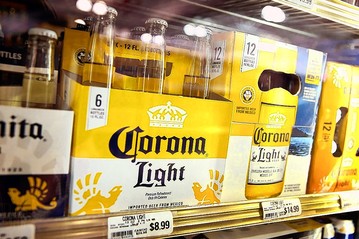
Looks like it’s not going to be such a hot holiday season for liquor companies, casinos, and prostitutes – at least according to the latest reading of the “Vice Index.” The index – a concoction from SouthBay Research’s Andrew Zatlin measures actual spending levels – yes, on vices – and uses the numbers to show where the economy is headed. As opposed to Tuesday’s chipper report on the services sector from the ISM, the vice index’s September sounding came in at 104, its lowest level since February’s 96. That means, Mr. Zatlin said, that not only will spending drop from levels earlier this year, but it’s going to stay that way into the first-quarter. The index, he says, is highly correlated to official readings on consumer spending, with one caveat – the vice index predicts consumer spending four months out. “It’s signalling that consumer spending growth is about to drop and stay subdued for a few months,” he wrote in a note to clients. “Not contracting, but well below expectations.” The index measures spending on things like prostitution, liquor sales, and gambling; it measures prices paid, the volume and frequency of sales (Mr. Zatlin doesn’t disclose exactly how he tracks these). Measuring this kind of discretionary spending, he says, provides a window into the true state of the economy. What this means specifically for holiday sales isn’t exactly clear, Mr. Zatlin said. Vice spending tends to be more spur of the moment. “I don’t think people spending on vices think that far into the future,” he told MoneyBeat. But it certainly doesn’t point to a robust holiday season. On...